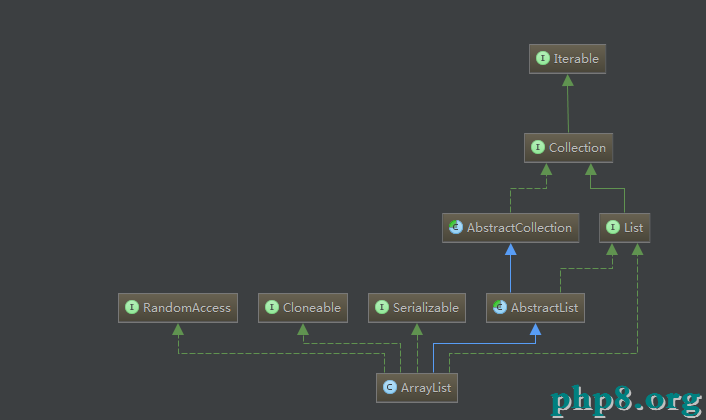
實現接口:List、RandomAccess、Cloneable、Serializable。核心字段:
transient Object[] elementData; // 數組緩衝區,transient 避免序列化空槽
private int size; // 實際元素個數public ArrayList() { this(10); } // 默認容量 10
public ArrayList(int initialCapacity) { ... } // 指定初始容量
public ArrayList(Collection<? extends E> c) { ... } // 集合轉列表grow() (JDK 8)private void grow(int minCapacity) {
int oldCapacity = elementData.length;
int newCapacity = oldCapacity + (oldCapacity >> 1); // 1.5 倍
if (newCapacity - minCapacity < 0) newCapacity = minCapacity;
if (newCapacity - MAX_ARRAY_SIZE > 0) newCapacity = hugeCapacity(minCapacity);
elementData = Arrays.copyOf(elementData, newCapacity);
}觸發時機:add、addAll 時 size + 1 > capacity。
get/set - O(1)public E get(int index) {
rangeCheck(index);
return elementData(index);
}
public E set(int index, E element) {
rangeCheck(index);
E old = elementData(index);
elementData[index] = element;
return old;
}add(E e) - 均攤 O(1)public boolean add(E e) {
ensureCapacityInternal(size + 1);
elementData[size++] = e;
return true;
}add(index, e) - O(n)public void add(int index, E element) {
rangeCheckForAdd(index);
ensureCapacityInternal(size + 1);
System.arraycopy(elementData, index, elementData, index + 1, size - index);
elementData[index] = element;
size++;
}System.arraycopy 將 index 及之後元素整體右移一位。
remove(index) / remove(Object) - O(n)public E remove(int index) {
rangeCheck(index);
modCount++;
E old = elementData(index);
int numMoved = size - index - 1;
if (numMoved > 0)
System.arraycopy(elementData, index + 1, elementData, index, numMoved);
elementData[--size] = null; // GC 友好
return old;
}private class Itr implements Iterator<E> {
int cursor; // 下一個待返回元素索引
int lastRet = -1; // 上一次返回元素索引
int expectedModCount = modCount; // 快照
public boolean hasNext() { return cursor != size; }
public E next() {
checkForComodification();
int i = cursor;
if (i >= size) throw new NoSuchElementException();
cursor = i + 1;
return elementData(lastRet = i);
}
public void remove() {
if (lastRet < 0) throw new IllegalStateException();
checkForComodification();
try {
ArrayList.this.remove(lastRet);
cursor = lastRet;
lastRet = -1;
expectedModCount = modCount; // 關鍵:同步修改計數
} catch (IndexOutOfBoundsException e) {
throw new ConcurrentModificationException();
}
}
final void checkForComodification() {
if (modCount != expectedModCount)
throw new ConcurrentModificationException();
}
}foreach 編譯為 Iterator,調用 list.remove() 導致 modCount++,但迭代器的 expectedModCount 未更新,下次 next() 觸發檢查拋異常。
Iterator<String> it = list.iterator();
while (it.hasNext()) {
    it.next(); // 必須先 next(),設置 lastRet
    if (condition) it.remove(); // 迭代器 remove() 會同步 expectedModCount
}List<String> sub = list.subList(1, 3); // 返回 SubList 視圖
sub.set(0, "new"); // 修改視圖 → 原列表同步變化
list.add("x"); // 修改原列表結構 → 視圖失效,後續操作拋 CMESubList 共享原數組,通過 offset/size 映射區間。結構性修改(增刪)會導致視圖失效。
Collections.synchronizedList(new ArrayList<>())、CopyOnWriteArrayList(讀多寫少)、手動 synchronized。ArrayList 以動態數組為核心,隨機訪問極快,增刷需搬移元素。modCount + expectedModCount 實現 fail-fast,保護單線程邏輯正確性。掌握 grow、arraycopy、Itr.remove 三大核心片段,即可應對面試與生產疑難雜癥。