上篇示範物件轉 XML,本文著重於 XML 解析為強型別集合,並引入 ClassAttribute/PropertyAttribute 支援類別與屬性別名對應,同時以字典快取屬性資訊優化反射效能。
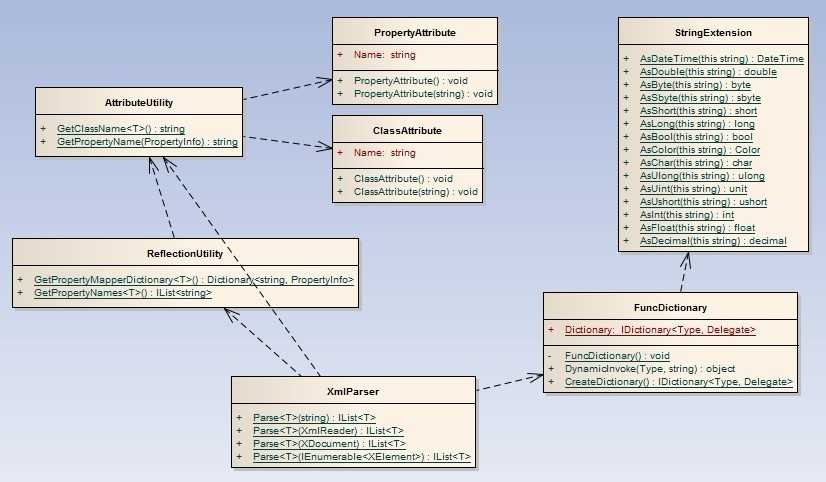
Dictionary<string, PropertyInfo>,Key 為 XML 屬性名,Value 為屬性反射物件,一次反射多次複用。public static string GetClassName<T>() where T : new() => GetClassName(typeof(T));
public static string GetClassName(Type type)
{
if (type == null) return string.Empty;
string name = type.Name;
var attrs = type.GetCustomAttributes(typeof(ClassAttribute), false) as ClassAttribute[];
if (attrs != null && attrs.Length > 0 && !string.IsNullOrWhiteSpace(attrs[0].Name))
name = attrs[0].Name;
return name;
}
public static string GetPropertyName(PropertyInfo prop)
{
if (prop == null) return string.Empty;
string name = prop.Name;
var attrs = prop.GetCustomAttributes(typeof(PropertyAttribute), false) as PropertyAttribute[];
if (attrs != null && attrs.Length > 0 && !string.IsNullOrWhiteSpace(attrs[0].Name))
name = attrs[0].Name;
return name;
}
public static Dictionary<string, PropertyInfo> GetPropertyMapperDictionary<T>() where T : new()
    => GetPropertyMapperDictionary(typeof(T));

public static Dictionary<string, PropertyInfo> GetPropertyMapperDictionary(Type type)
{
    if (type == null) return null;
    var dict = new Dictionary<string, PropertyInfo>();
    foreach (PropertyInfo prop in type.GetProperties())
        dict.Add(AttributeUtility.GetPropertyName(prop), prop);
    return dict;
}
public static IList<T> Parse<T>(XmlReader reader) where T : new()
{
    try { return ParseXmlReader<T>(reader); } catch { return new List<T>(); }
}

private static IList<T> ParseXmlReader<T>(XmlReader reader) where T : new()
{
    var propDict = ReflectionUtility.GetPropertyMapperDictionary<T>();
    string className = AttributeUtility.GetClassName<T>();
    var entities = new List<T>();
    T entity = new T();
    string lastElementName = null;

    while (reader.Read())
    {
        switch (reader.NodeType)
        {
            case XmlNodeType.Element:
                if (string.Equals(reader.Name, className))
                {
                    entity = new T();
                    entities.Add(entity);
                }
                lastElementName = reader.Name;
                break;
            case XmlNodeType.Text:
                SetPropertyValue(propDict, entity, lastElementName, reader.Value);
                break;
        }
    }
    return entities;
}
public static IList<T> Parse<T>(IEnumerable<XElement> elements) where T : new()
{
    if (elements == null || !elements.Any()) return new List<T>();
    try
    {
        var propDict = ReflectionUtility.GetPropertyMapperDictionary<T>();
        var entities = new List<T>();
        foreach (XElement el in elements)
        {
            T entity = new T();
            entities.Add(entity);
            foreach (XElement child in el.Elements())
                SetPropertyValue(propDict, entity, child.Name.LocalName, child.Value);
        }
        return entities;
    }
    catch { return new List<T>(); }
}
private static void SetPropertyValue<T>(Dictionary<string, PropertyInfo> dict, T entity, string xmlName, string value) where T : new()
{
    if (string.IsNullOrWhiteSpace(xmlName) || !dict.ContainsKey(xmlName)) return;
    PropertyInfo prop = dict[xmlName];
    if (prop != null && prop.CanWrite)
    {
        object val = new FuncDictionary().DynamicInvoke(prop.PropertyType, value);
        prop.SetValue(entity, val, null);
    }
}
反射資訊快取:無論解析多少實體,ReflectionUtility.GetPropertyMapperDictionary<T>() 僅呼叫一次,後續皆以字典查找 PropertyInfo,大幅降低反射開銷。對於物件數量不大的情境,效能差異可忽略;大量資料時效果顯著。
<MapperInfoItem>
  <DefaultName>MapperInfoItemIndex0</DefaultName>
  <CreatedTime>2012/1/6 19:24:34</CreatedTime>
  <IsActive>True</IsActive>
  ...
</MapperInfoItem>
以上兩種解析器均能正確處理此類「子元素對應屬性」的 XML 結構。
作者:JasenKin | 出處:https://www.cnblogs.com/jasenkin/