SQL Server 物件儲存的「真相」藏在三張系統檢視中:sys.partitions (分區層級)、sys.allocation_units (配置單元層級)、sys.system_internals_allocation_units (內部頁面指標層級)。本文詳細解析三張檢視的欄位含義、關聯邏輯,並透過兩個實測案例 (含叢集/非叢集索引表、堆表) 展示如何從元數據重構完整儲存拓撲。
| 欄位 | 說明 |
|---|---|
partition_id | 分區唯一 ID (資料庫內) |
object_id | 所屬物件 ID |
index_id | 索引 ID (0=堆, 1=叢集, 2+=非叢集) |
partition_number | 分區序號 (非分區表為 1) |
hobt_id | **關鍵**:包含列資料的堆/B樹 ID (IN_ROW_DATA / ROW_OVERFLOW_DATA 連結此 ID) |
rows | 約略列數 |
data_compression / _desc | 壓縮狀態 (NONE/ROW/PAGE) |
| 欄位 | 說明 |
|---|---|
allocation_unit_id | 配置單元唯一 ID |
type / type_desc | 0=DROPPED, 1=IN_ROW_DATA, 2=LOB_DATA, 3=ROW_OVERFLOW_DATA |
container_id | **關鍵關聯鍵**:
|
data_space_id | 所屬檔案群組 ID |
total_pages / used_pages / data_pages | 頁面計數 (data_pages 排除 IAM/索引頁) |
在 sys.allocation_units 基礎上新增三個頁面指標:
first_page:首資料頁 (檔案:頁面)root_page:索引根頁 (堆為 0)first_iam_page:首個 IAM 頁面這三個指標是 DBCC PAGE 深度分析的**精確起點**。
sys.objects (object_id)
    │
    ├─ sys.indexes (object_id, index_id)  -- 索引定義
    │
    └─ sys.partitions (object_id, index_id, partition_number)
         │
         ├─ hobt_id  ──────────────────┐
         │                              │
         ▼                              ▼
sys.allocation_units (type=1,3)   sys.allocation_units (type=2)
   container_id = hobt_id           container_id = partition_id
   IN_ROW_DATA /                    LOB_DATA
   ROW_OVERFLOW_DATA
         │
         ▼
sys.system_internals_allocation_units (同 container_id 關聯)
   + first_page, root_page, first_iam_page
CREATE TABLE test (
    a INT, b VARCHAR(20), c TEXT
);
CREATE UNIQUE CLUSTERED INDEX idx_test ON test(a);
CREATE INDEX ix_test ON test(b);
INSERT INTO test VALUES (1,'a','aaa'), (2,'b','bbb'), (3,'c','ccc');-- 1. 物件與索引
SELECT name, object_id, index_id, type_desc FROM sys.indexes WHERE object_id = OBJECT_ID('test');
-- 2. 分區
SELECT partition_id, object_id, index_id, partition_number, hobt_id, rows
FROM sys.partitions WHERE object_id = OBJECT_ID('test');
-- 3. 配置單元 (標準檢視)
SELECT au.allocation_unit_id, au.type_desc, au.container_id,
au.data_space_id, au.total_pages, au.used_pages, au.data_pages
FROM sys.allocation_units au
JOIN sys.partitions p
ON (au.type IN (1,3) AND au.container_id = p.hobt_id)
OR (au.type = 2 AND au.container_id = p.partition_id)
WHERE p.object_id = OBJECT_ID('test');
-- 4. 配置單元 (內部檢視,含頁面指標)
SELECT au.allocation_unit_id, au.type_desc, au.container_id,
au.filegroup_id, au.total_pages, au.used_pages, au.data_pages,
au.first_page, au.root_page, au.first_iam_page
FROM sys.system_internals_allocation_units au
JOIN sys.partitions p
ON (au.type IN (1,3) AND au.container_id = p.hobt_id)
OR (au.type = 2 AND au.container_id = p.partition_id)
WHERE p.object_id = OBJECT_ID('test');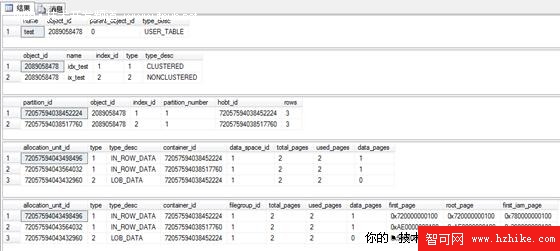
IN_ROW_DATA (type=1, container=叢集 hobt_id) → 叢集索引資料列 (含 a, b, c 的行內部分)IN_ROW_DATA (type=1, container=非叢集 hobt_id) → 非叢集索引鍵值 (b) + 叢集鍵查找值 (a)LOB_DATA (type=2, container=叢集 partition_id) → TEXT 欄位資料 (行外 LOB 樹)關鍵洞見: LOB_DATA 配置單元的 container_id 指向 叢集索引的 partition_id (而非 hobt_id),因為 LOB 資料歸屬於「表」這個邏輯實體,不隸屬於某個特定索引的 B 樹。
CREATE TABLE heaptest (a INT, b VARCHAR(20), c TEXT);
INSERT INTO heaptest VALUES (1,'a','aaa'), (2,'b','bbb'), (3,'c','ccc');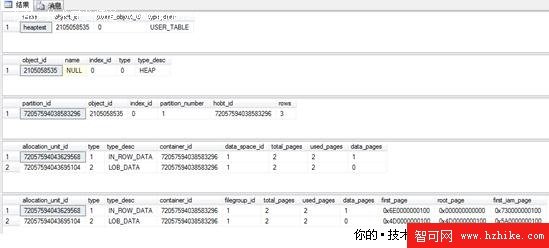
IN_ROW_DATA (container=堆 hobt_id) → 堆表資料列ROW_OVERFLOW_DATA (container=堆 hobt_id) → **無資料** (本案例 VARCHAR(20) 未溢位),但配置單元存在 (預分配機制)LOB_DATA (container=堆 partition_id) → TEXT 欄位 LOB 樹差異點: 堆表的 sys.partitions.index_id=0,hobt_id 即堆的 B 樹 ID;LOB_DATA 同樣綁定 partition_id。
DECLARE @TableName SYSNAME = 'YourTable';
DECLARE @ObjID INT = OBJECT_ID(@TableName);

SELECT
    o.name AS ObjectName,
    i.name AS IndexName,
    i.type_desc AS IndexType,
    p.partition_number,
    p.hobt_id,
    p.partition_id,
    p.rows,
    au.type_desc AS AllocUnitType,
    au.allocation_unit_id,
    au.total_pages,
    au.used_pages,
    au.data_pages,
    iua.first_page,
    iua.root_page,
    iua.first_iam_page
FROM sys.objects o
JOIN sys.indexes i ON o.object_id = i.object_id
JOIN sys.partitions p ON i.object_id = p.object_id AND i.index_id = p.index_id
JOIN sys.allocation_units au
    ON (au.type IN (1,3) AND au.container_id = p.hobt_id)
    OR (au.type = 2 AND au.container_id = p.partition_id)
LEFT JOIN sys.system_internals_allocation_units iua
    ON au.allocation_unit_id = iua.allocation_unit_id
WHERE o.object_id = @ObjID
ORDER BY i.index_id, p.partition_number, au.type;SELECT TOP 20
OBJECT_NAME(p.object_id) AS TableName,
i.name AS IndexName,
au.type_desc,
au.total_pages * 8.0 / 1024 AS Size_MB,
au.used_pages * 8.0 / 1024 AS Used_MB,
iua.first_iam_page
FROM sys.allocation_units au
JOIN sys.partitions p
ON (au.type IN (1,3) AND au.container_id = p.hobt_id)
OR (au.type = 2 AND au.container_id = p.partition_id)
JOIN sys.indexes i ON p.object_id = i.object_id AND p.index_id = i.index_id
LEFT JOIN sys.system_internals_allocation_units iua ON au.allocation_unit_id = iua.allocation_unit_id
WHERE au.type_desc IN ('LOB_DATA', 'ROW_OVERFLOW_DATA')
AND au.used_pages > 0
ORDER BY au.used_pages DESC;-- 給定表名與索引名,取得首資料頁、根頁、首 IAM 頁
DECLARE @TableName SYSNAME = 'YourTable', @IndexName SYSNAME = 'YourIndex';
SELECT
iua.first_page, iua.root_page, iua.first_iam_page
FROM sys.indexes i
JOIN sys.partitions p ON i.object_id = p.object_id AND i.index_id = p.index_id
JOIN sys.allocation_units au
ON (au.type IN (1,3) AND au.container_id = p.hobt_id)
OR (au.type = 2 AND au.container_id = p.partition_id)
JOIN sys.system_internals_allocation_units iua ON au.allocation_unit_id = iua.allocation_unit_id
WHERE i.object_id = OBJECT_ID(@TableName) AND i.name = @IndexName
AND au.type = 1; -- IN_ROW_DATAhobt_id → 1 個 IN_ROW_DATA 配置單元 (+ 可選 ROW_OVERFLOW_DATA);LOB_DATA 則按 partition_id 歸屬於「表」。sys.system_internals_allocation_units 雖屬內部檢視,但提供 first_page/root_page/first_iam_page 三大頁面指標,是**頁面級深度分析的唯一權威來源**。