在 Java 並發編程中,線程池是提升系統性能、控制資源消耗的核心組件。本文將從架構圖解、核心實現類、常見類型示例、關鍵參數配置、任務隊列機制、執行流程以及線程數量確定策略等維度,系統性地剖析 Java 線程池框架。
線程池的核心架構由 ThreadPoolExecutor 實現,其內部包含核心線程池、任務隊列、線程工廠、拒絕策略等關鍵組件。以下為架構示意圖:
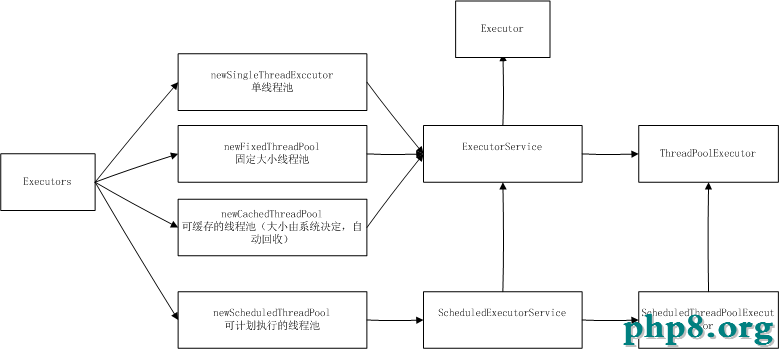
Java 通過 Executors 工廠類提供了四種預設線程池,分別適用於不同業務場景。為了演示,先定義一個簡單的任務類:
public class MyThread extends Thread {
    @Override
    public void run() {
        System.out.println(Thread.currentThread().getName() + " 正在執行");
    }
}特點:僅有一條工作線程,任務按順序串行執行,保證任務之間不併發。
ExecutorService pool = Executors.newSingleThreadExecutor();
Thread t1 = new MyThread();
Thread t2 = new MyThread();
Thread t3 = new MyThread();

pool.execute(t1);
pool.execute(t2);
pool.execute(t3);
pool.shutdown();
輸出結果:
pool-1-thread-1 正在執行
pool-1-thread-1 正在執行
pool-1-thread-1 正在執行特點:核心線程數 = 最大線程數,無閒置線程回收機制,適合負載穩定的長期任務。
ExecutorService pool = Executors.newFixedThreadPool(3);
Thread t1 = new MyThread();
Thread t2 = new MyThread();
Thread t3 = new MyThread();
Thread t4 = new MyThread();
Thread t5 = new MyThread();

pool.execute(t1);
pool.execute(t2);
pool.execute(t3);
pool.execute(t4);
pool.execute(t5);
pool.shutdown();
輸出結果(示例):
pool-1-thread-1 正在執行
pool-1-thread-2 正在執行
pool-1-thread-1 正在執行
pool-1-thread-2 正在執行特點:核心線程數為 0,最大線程數無上限(Integer.MAX_VALUE),閒置線程 60 秒後回收,適合大量短生命週期的異步任務。
ExecutorService pool = Executors.newCachedThreadPool();
Thread t1 = new MyThread();
Thread t2 = new MyThread();
Thread t3 = new MyThread();
Thread t4 = new MyThread();
Thread t5 = new MyThread();

pool.execute(t1);
pool.execute(t2);
pool.execute(t3);
pool.execute(t4);
pool.execute(t5);
pool.shutdown();
輸出結果(示例):
pool-1-thread-2 正在執行
pool-1-thread-4 正在執行
pool-1-thread-3 正在執行
pool-1-thread-1 正在執行
pool-1-thread-5 正在執行特點:支持定時執行、周期性執行任務,底層基於 DelayedWorkQueue 實現延遲調度。
ScheduledExecutorService pool = Executors.newScheduledThreadPool(2);

// 任務 A:每 2 秒打印一次
pool.scheduleAtFixedRate(new Runnable() {
    @Override
    public void run() {
        System.out.println("================");
    }
}, 1000, 2000, TimeUnit.MILLISECONDS);

// 任務 B:每 2 秒打印一次,驗證互不干擾
pool.scheduleAtFixedRate(new Runnable() {
    @Override
    public void run() {
        System.out.println("+++++++++++++++++");
    }
}, 1000, 2000, TimeUnit.MILLISECONDS);
輸出結果(示例):
================
+++++++++++++++++
+++++++++++++++++
+++++++++++++++++ThreadPoolExecutor 的構造函數定義了線程池的核心行為:
keepAliveTime 的時間單位。Runnable 任務。| 隊列類型 | 特點 | 適用線程池 | 風險提示 |
|---|---|---|---|
| SynchronousQueue | 同步移交,不存儲任務,直接提交給線程 | newCachedThreadPool | 線程池通常無界,可能導致 OOM |
| LinkedBlockingQueue | 無界隊列(默認 Integer.MAX_VALUE) | newSingleThreadExecutor、newFixedThreadPool | 任務積壓可能耗盡內存 |
| ArrayBlockingQueue | 有界隊列,需指定容量 | 自定義線程池 | 隊列滿時觸發拒絕策略 |
| DelayedWorkQueue | 延遲隊列,按執行時間排序 | newScheduledThreadPool | 定時任務專用 |
任務提交後的決策流程:
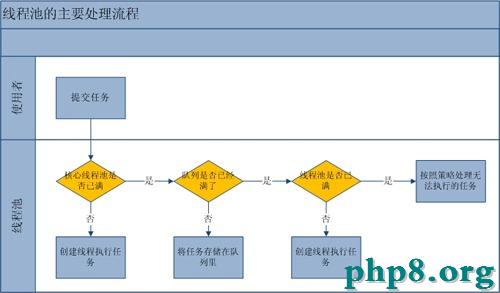
簡述流程:
根據任務類型科學配置線程數:
Ncpu + 1,減少上下文切換開銷。2 * Ncpu,利用等待時間提升 CPU 利用率。CallerRunsPolicy 讓調用者執行任務,起到削峰填谷作用)。ThreadFactoryBuilder 設置有業務含義的線程名,便於鏈路追蹤與問題排查。Java 線程池框架以 ThreadPoolExecutor 為核心,通過七大參數靈活控制線程生命週期、任務調度與資源隔離。理解隊列機制、執行流程、參數調優策略,是構建高性能、高穩定性並發系統的必修課。生產環境務必拒絕無界隊列與無界線程池,採用自定義配置並完善監控體系。