在前面的章節中,我們已經探討了 ArrayList 和 LinkedList,它們查找元素的效率均較低,需要逐個比較。本章將深入剖析 HashMap——一種查找效率極高(接近 O(1))的鍵值對存儲結構。我們將從 Map 接口定義、HashMap 使用示例、構造方法、核心實現原理(數組+鏈表+哈希)、擴容機制、關鍵方法源碼分析、特點總結等多個維度進行詳細闡述。
Map 存儲鍵值對,一個鍵映射一個值,鍵不可重複,重複 put 會覆蓋舊值。典型應用場景:
數組、List 可視為特殊的 Map:索引為鍵,元素為值。
public interface Map<K,V> {
    // 基礎增刪改查
    V put(K key, V value);
    V get(Object key);
    V remove(Object key);

    // 狀態查詢
    int size();
    boolean isEmpty();
    boolean containsKey(Object key);
    boolean containsValue(Object value);

    // 批量操作
    void putAll(Map<? extends K, ? extends V> m);
    void clear();

    // 視圖方法(返回集合視圖,非拷貝,修改視圖影響原 Map)
    Set<K> keySet();
    Collection<V> values();
    Set<Map.Entry<K,V>> entrySet();

    // 內部接口:鍵值對實體
    interface Entry<K,V> {
        K getKey();
        V getValue();
        V setValue(V value);
        boolean equals(Object o);
        int hashCode();
    }

    // Object 繼承方法
    boolean equals(Object o);
    int hashCode();
}
put 返回舊值,無舊值返回 nullkeySet()/values()/entrySet() 返回的是視圖,非拷貝,操作視圖直接影響原 Mapnull 或 equals() 返回 trueimport java.util.*;
public class WordFrequency {
public static void main(String[] args) {
Random rnd = new Random();
Map<Integer, Integer> countMap = new HashMap<>();
// 生成 1000 個 0~3 的隨機數並統計頻次
for (int i = 0; i < 1000; i++) {
int num = rnd.nextInt(4);
Integer count = countMap.get(num);
if (count == null) {
countMap.put(num, 1);
} else {
countMap.put(num, count + 1);
}
}
// 遍歷輸出
for (Map.Entry<Integer, Integer> kv : countMap.entrySet()) {
System.out.println(kv.getKey() + "," + kv.getValue());
}
// 典型輸出:0,269 1,236 2,261 3,234
}
}
| 構造方法 | 適用場景 | 備註 |
|---|---|---|
HashMap() | 通用場景,默認容量 16,負載因子 0.75 | 最常用 |
HashMap(int initialCapacity) | 預估數據量大,避免頻繁擴容 | 建議設為預估大小/0.75 |
HashMap(int initialCapacity, float loadFactor) | 精細控制空間換時間權衡 | loadFactor 0.5~0.9 之間 |
HashMap(Map<? extends K,? extends V> m) | 從現有 Map 複製構建 | 淺拷貝鍵值對 |
transient Entry<K,V>[] table = (Entry<K,V>[]) EMPTY_TABLE; // 哈希桶數組
transient int size;           // 實際鍵值對數量
int threshold;                // 擴容閾值 = capacity * loadFactor
final float loadFactor;       // 負載因子,默認 0.75

// 靜態內部類:鏈表節點
static class Entry<K,V> implements Map.Entry<K,V> {
    final K key;
    V value;
    Entry<K,V> next;          // 指向下一個節點(單向鏈表)
    int hash;                 // 緩存 key 的 hash 值,加速比較

    Entry(int h, K k, V v, Entry<K,V> n) {
        value = v; next = n; key = k; hash = h;
    }
}
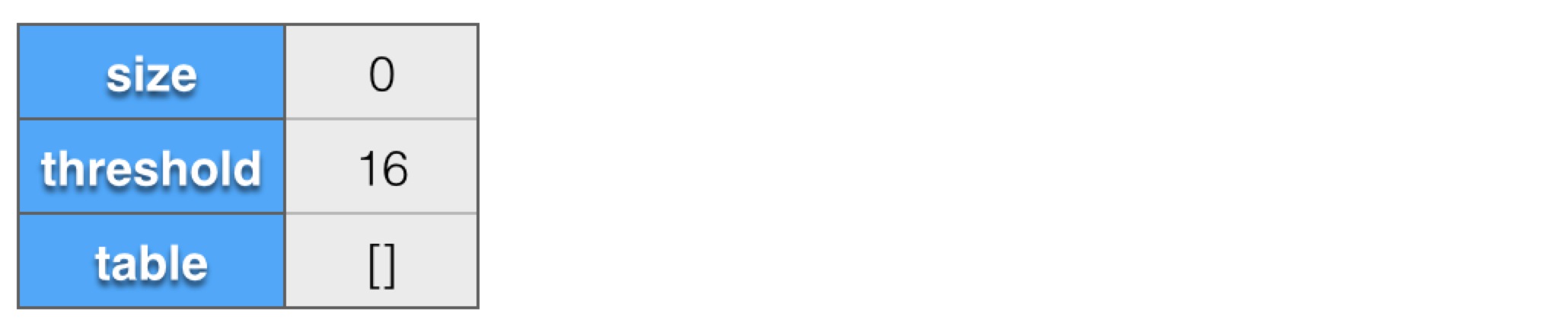
public V put(K key, V value) {
    // 1. 首次插入時初始化 table
    if (table == EMPTY_TABLE) {
        inflateTable(threshold);
    }

    // 2. null key 特殊處理(存放在 table[0])
    if (key == null) return putForNullKey(value);

    // 3. 計算 hash 值(二次擾動,提高均勻性)
    int hash = hash(key);

    // 4. 計算桶索引:h & (length-1) 等價於 h % length(length 為 2 的冪)
    int i = indexFor(hash, table.length);

    // 5. 遍歷鏈表查找是否已存在相同 key
    for (Entry<K,V> e = table[i]; e != null; e = e.next) {
        Object k;
        if (e.hash == hash && ((k = e.key) == key || key.equals(k))) {
            V oldValue = e.value;
            e.value = value;           // 覆蓋舊值
            e.recordAccess(this);
            return oldValue;
        }
    }

    // 6. 不存在則新增節點(頭插法)
    modCount++;
    addEntry(hash, key, value, i);
    return null;
}
// hash 擾動函數:基於 key.hashCode() 進行位運算,降低碰撞
final int hash(Object k) {
    int h = 0;
    h ^= k.hashCode();
    h ^= (h >>> 20) ^ (h >>> 12);
    return h ^ (h >>> 7) ^ (h >>> 4);
}

// 索引計算:利用 2 的冪特性,位運算替代取模
static int indexFor(int h, int length) {
    return h & (length - 1);
}

// 初始化 table
private void inflateTable(int toSize) {
    int capacity = roundUpToPowerOf2(toSize); // 向上取最接近的 2 的冪
    threshold = (int) Math.min(capacity * loadFactor, MAXIMUM_CAPACITY + 1);
    table = new Entry[capacity];
}
當 size >= threshold 且目標桶位非空時觸發擴容:
void addEntry(int hash, K key, V value, int bucketIndex) {
    if ((size >= threshold) && (null != table[bucketIndex])) {
        resize(2 * table.length);  // 容量翻倍
        hash = (null != key) ? hash(key) : 0;
        bucketIndex = indexFor(hash, table.length);
    }
    createEntry(hash, key, value, bucketIndex);
}

void resize(int newCapacity) {
    Entry[] oldTable = table;
    Entry[] newTable = new Entry[newCapacity];
    transfer(newTable, initHashSeedAsNeeded(newCapacity));
    table = newTable;
    threshold = (int) Math.min(newCapacity * loadFactor, MAXIMUM_CAPACITY + 1);
}

void transfer(Entry[] newTable, boolean rehash) {
    int newCapacity = newTable.length;
    for (Entry<K,V> e : table) {
        while (null != e) {
            Entry<K,V> next = e.next;
            if (rehash) e.hash = (e.key == null) ? 0 : hash(e.key);
            int i = indexFor(e.hash, newCapacity);
            e.next = newTable[i];   // 頭插法遷移(注意:JDK 7 為頭插,JDK 8 改為尾插避免死循環)
            newTable[i] = e;
            e = next;
        }
    }
}
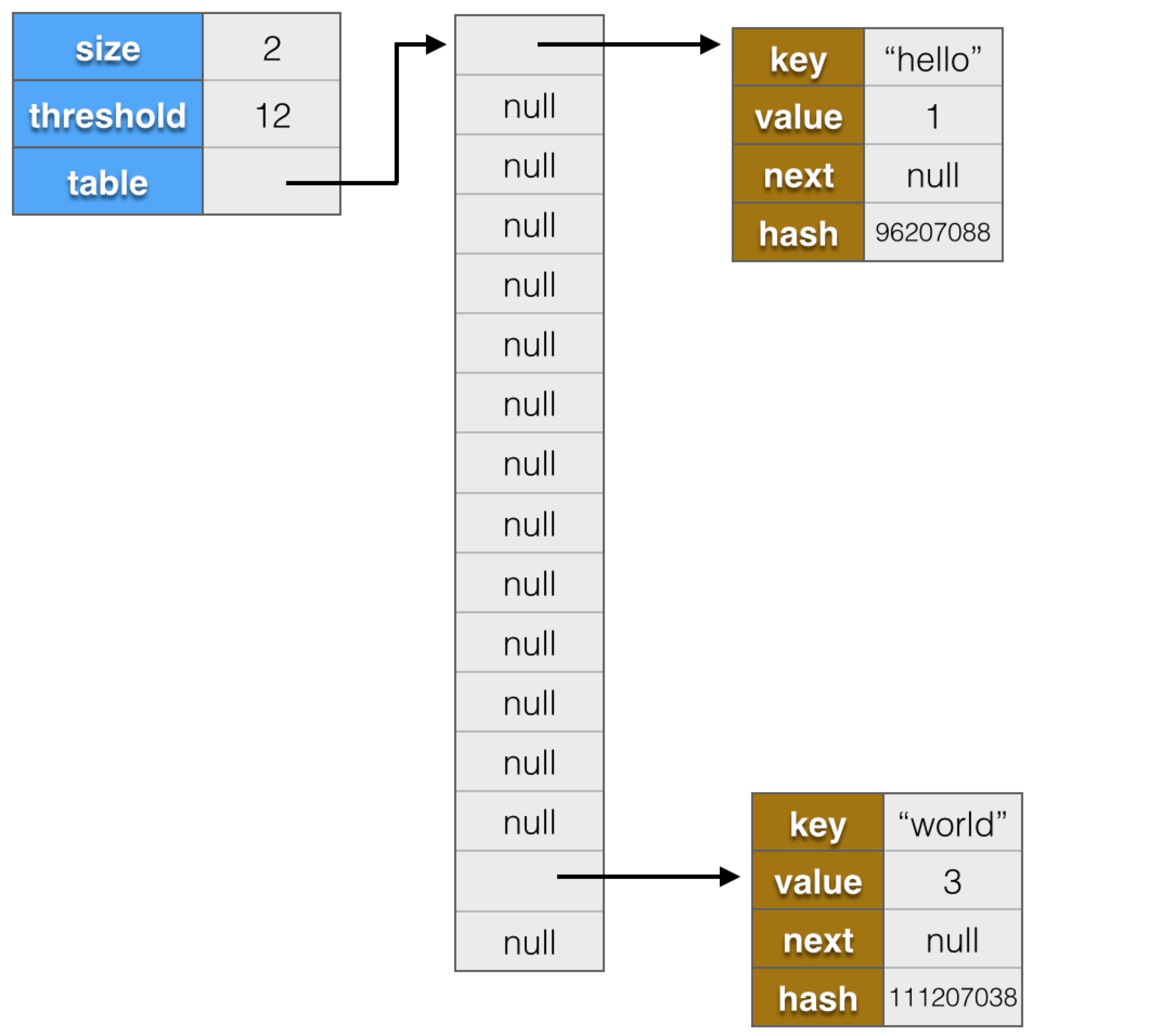
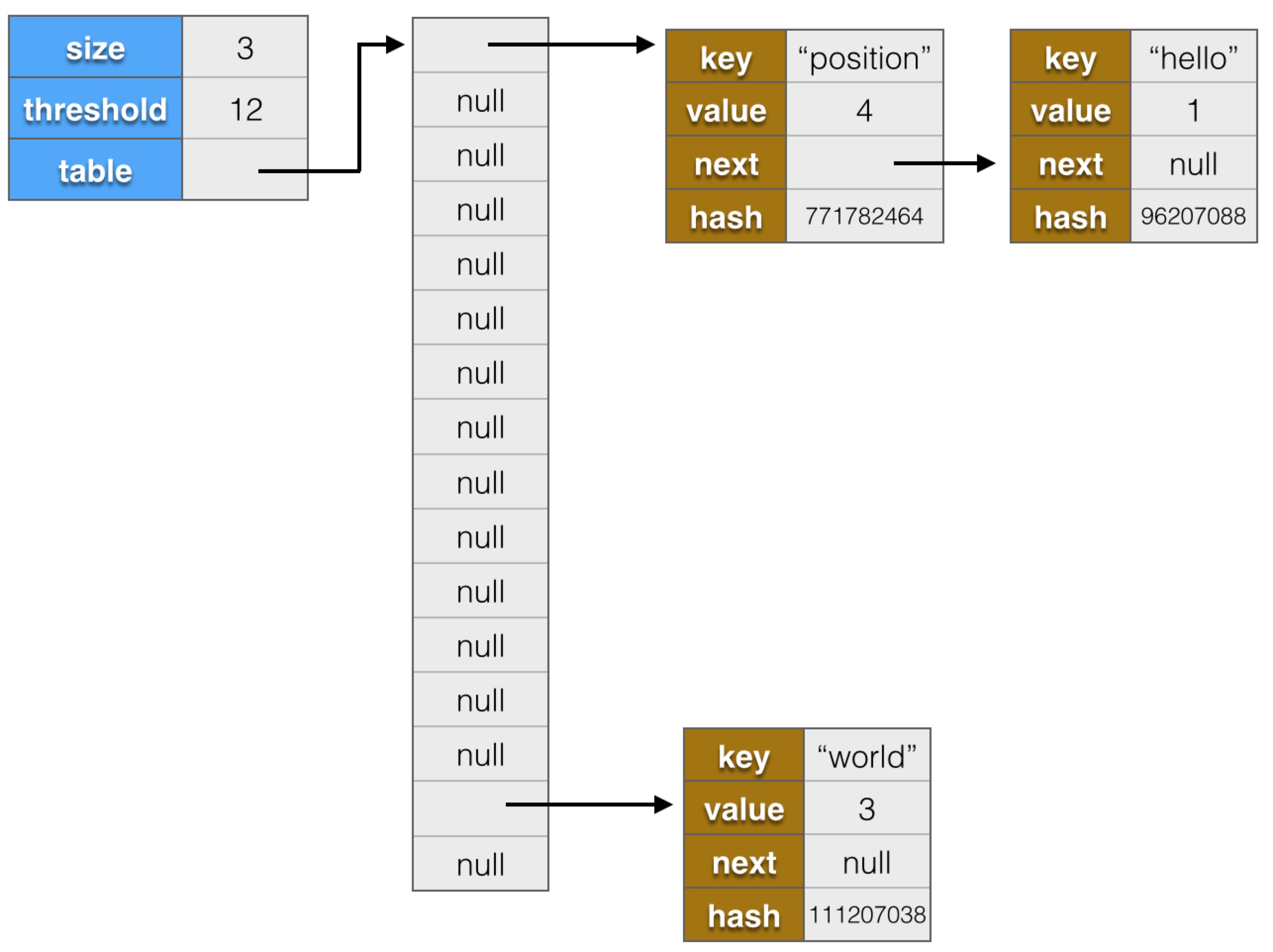
執行以下代碼:
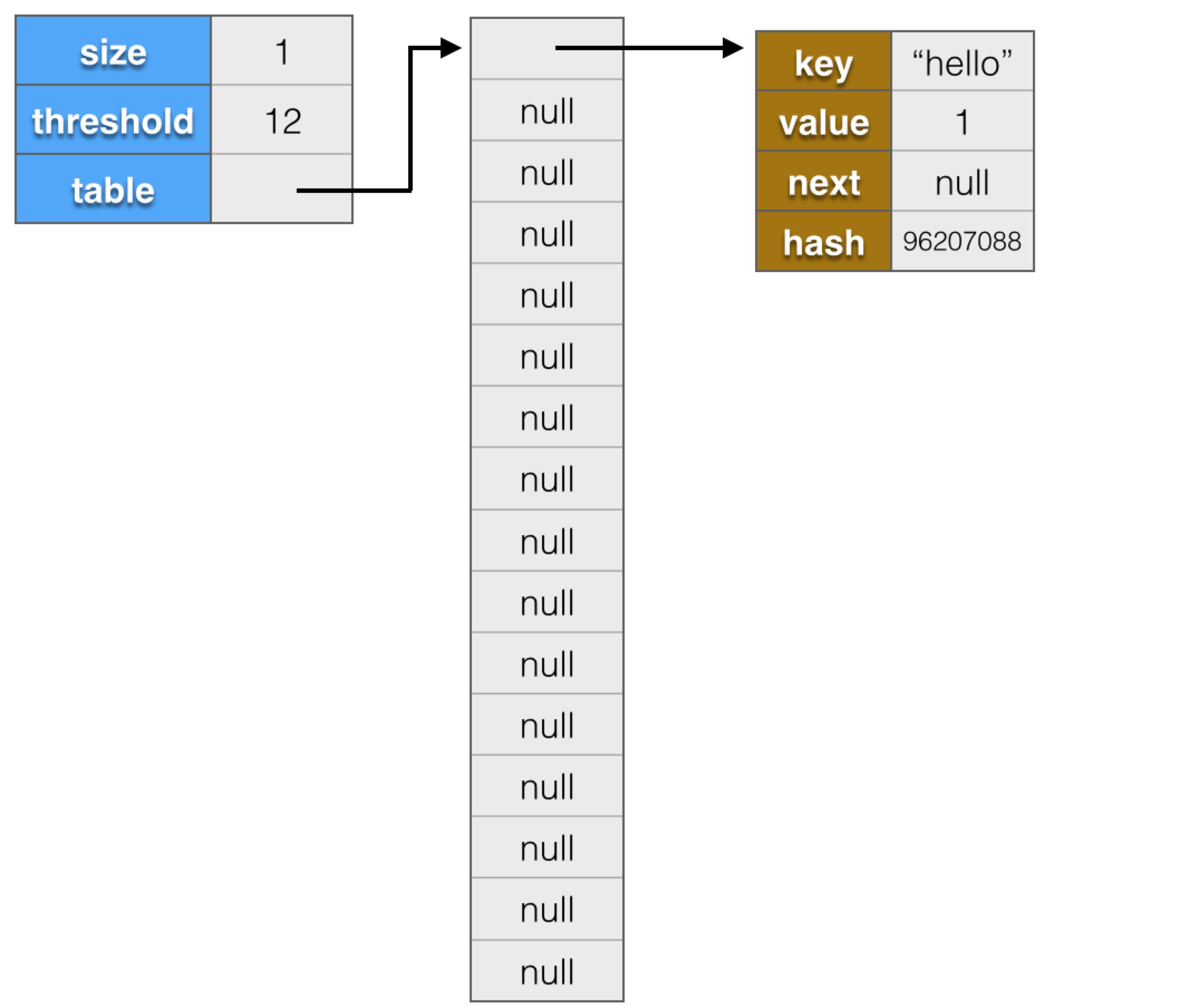
Map<String,Integer> countMap = new HashMap<>();
countMap.put("hello", 1);   // hash=96207088, index=0
countMap.put("world", 3);   // hash=111207038, index=15
countMap.put("position", 4); // hash=771782464, index=0 (碰撞,頭插法)
public V get(Object key) {
    if (key == null) return getForNullKey();
    Entry<K,V> entry = getEntry(key);
    return (entry == null) ? null : entry.getValue();
}

final Entry<K,V> getEntry(Object key) {
    if (size == 0) return null;
    int hash = (key == null) ? 0 : hash(key);
    for (Entry<K,V> e = table[indexFor(hash, table.length)]; e != null; e = e.next) {
        Object k;
        if (e.hash == hash && ((k = e.key) == key || (key != null && key.equals(k)))) {
            return e;
        }
    }
    return null;
}
public boolean containsKey(Object key) {
    return getEntry(key) != null;
}

public boolean containsValue(Object value) {
    if (value == null) return containsNullValue();
    Entry[] tab = table;
    for (int i = 0; i < tab.length; i++)
        for (Entry e = tab[i]; e != null; e = e.next)
            if (value.equals(e.value)) return true;
    return false;  // 值查找需全表掃描,O(n)
}
public V remove(Object key) {
    Entry<K,V> e = removeEntryForKey(key);
    return (e == null ? null : e.value);
}

final Entry<K,V> removeEntryForKey(Object key) {
    if (size == 0) return null;
    int hash = (key == null) ? 0 : hash(key);
    int i = indexFor(hash, table.length);
    Entry<K,V> prev = table[i];
    Entry<K,V> e = prev;

    while (e != null) {
        Entry<K,V> next = e.next;
        Object k;
        if (e.hash == hash && ((k = e.key) == key || (key != null && key.equals(k)))) {
            modCount++; size--;
            if (prev == e) table[i] = next;  // 刪除頭節點
            else prev.next = next;           // 刪除中間/尾節點
            e.recordRemoval(this);
            return e;
        }
        prev = e;
        e = next;
    }
    return null;
}
| 特性 | 表現 | 說明 |
|---|---|---|
| 查找/插入/刪除效率 | O(1) 級別 | 哈希定位 + 短鏈表遍歷 |
| 順序性 | 無序 | 哈希值隨機分佈,不保證插入/迭代順序 |
| null 支持 | 支持 1 個 null key,多個 null value | null key 固定存 table[0] |
| 線程安全 | 非線程安全 | 多線程環境用 ConcurrentHashMap 或 Collections.synchronizedMap |
| 適用場景 | 高頻鍵值查找、不需要順序 | 如緩存、索引、計數器、配置映射 |
LinkedHashMap(雙向鏈表維護順序)TreeMap(紅黑樹,O(log n))ConcurrentHashMap(CAS + synchronized + 節點鎖)HashMap 體現了計算機科學中極其重要的一種思維:**用空間換時間,用哈希值將「與所有元素比較」轉化為「直接定位 + 少量比較」**。
int hash,再調用 equals(),大幅降低比較開銷equals() 相等的對象,hashCode() 必須相等(否則無法正確查找)本章提到了 Set 接口,下一章我們將探討其重要實現類 HashSet,並揭秘它如何基於 HashMap 實現「不重複集合」語義。
未完待續,關注微信公眾號「老馬說編程」,從入門到高級,深入淺出,一起探索 Java 編程與計算機技術本質。