HashMap 是 Java 開發最高頻集合,底層為數組+鏈表(JDK 1.8+ 鏈表轉紅黑樹)。本文剖析核心源碼邏輯、性能優化點,並提供手寫簡易版實現與性能測試。
transient Node<K,V>[] table;  // 鏈表數組(JDK 1.8 叫 Node,舊版 Entry)

static class Node<K,V> implements Map.Entry<K,V> {
    final int hash;
    final K key;
    V value;
    Node<K,V> next;  // 鏈表指針
}public V put(K key, V value) {
int hash = hash(key); // 1. 計算 hash
int i = indexFor(hash, table.length); // 2. 定位數組下標
for (Node<K,V> e = table[i]; e != null; e = e.next) { // 3. 遍歷鏈表
if (e.hash == hash && (e.key == key || key.equals(e.key))) {
V old = e.value;
e.value = value; // 4. key 存在:覆蓋值
return old;
}
}
addEntry(hash, key, value, i); // 5. key 不存在:頭插法/尾插法插入
return null;
}public V get(Object key) {
int hash = hash(key);
for (Node<K,V> e = table[indexFor(hash, table.length)]; e != null; e = e.next) {
if (e.hash == hash && (e.key == key || key.equals(key)))
return e.value;
}
return null;
}// JDK 8 擾動函數:高16位參與運算,減少碰撞
static final int hash(Object key) {
int h;
return (key == null) ? 0 : (h = key.hashCode()) ^ (h >>> 16);
}
// 索引計算:位運算替代取模,要求 table.length 為 2 的冪次
static int indexFor(int h, int length) {
return h & (length - 1);
}原理:h & (length-1) 等價於 h % length(length 為 2ⁿ),位運算極快。擾動函數讓高位特徵參與低位索引計算,分佈更均勻。
size > threshold = capacity * loadFactor(默認 0.75)public class SimpleHashMap<K,V> {
private static final int DEFAULT_CAPACITY = 16;
private static final float LOAD_FACTOR = 0.75f;
private Node<K,V>[] table;
private int size;
public SimpleHashMap() {
table = new Node[DEFAULT_CAPACITY];
}
private int hash(K key) {
int h = key == null ? 0 : key.hashCode();
return h ^ (h >>> 16); // 擾動
}
private int index(int hash) {
return hash & (table.length - 1);
}
public V put(K key, V value) {
int h = hash(key);
int i = index(h);
for (Node<K,V> e = table[i]; e != null; e = e.next) {
if (e.hash == h && (e.key == key || key.equals(e.key))) {
V old = e.value;
e.value = value;
return old;
}
}
// 頭插法
table[i] = new Node<>(h, key, value, table[i]);
if (++size > table.length * LOAD_FACTOR) resize();
return null;
}
public V get(K key) {
int h = hash(key);
for (Node<K,V> e = table[index(h)]; e != null; e = e.next) {
if (e.hash == h && (e.key == key || key.equals(e.key)))
return e.value;
}
return null;
}
private void resize() {
Node<K,V>[] old = table;
table = new Node[old.length * 2];
size = 0;
for (Node<K,V> e : old) {
while (e != null) {
put(e.key, e.value); // 重新哈希插入
e = e.next;
}
}
}
static class Node<K,V> {
final int hash; final K key; V value; Node<K,V> next;
Node(int h, K k, V v, Node<K,V> n) { hash=h; key=k; value=v; next=n; }
}
}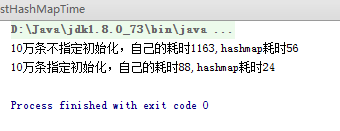
簡易版基本功能正確,但無紅黑樹轉換、無並發優化、擴容非線程安全,僅供學習理解原理。
理解 HashMap 核心在於:擾動函數分佈均勻、位運算索引高效、負載因子平衡空間時間、擴容重哈希代價大、JDK 1.8 紅黑樹解決極端碰撞。實戰中:預設容量、不可變對象作 Key、避免自定義糟糕 hashCode()。