創建型模式的核心使命是將物件的建立過程封裝起來,使「建立責任」與「使用責任」分離。簡單工廠模式作為工廠家族的入門形態,雖不屬於 GoF 23 種經典模式,卻是理解工廠方法、抽象工廠的基石。本文通過「小花果園」種植水果的生動案例,系統講解簡單工廠的結構、實現與應用場景。
Java 使用 new 建立物件:
StringBuffer sb = new StringBuffer(1000);缺點:
工廠模式解決方案:由專門的工廠類負責實例化,客戶端僅依賴產品介面。
public interface FruitIF {
    void plant();      // 種植
    void grow();       // 生長
    void harvest();    // 收穫
    String getColor();
    String getName();
}

// 蘋果:多年生木本,有樹齡屬性
public class Apple implements FruitIF {
    private int treeAge;
    public void plant() { log("Apple has been planted."); }
    public void grow() { log("Apple is growing..."); }
    public void harvest() { log("Apple has been harvested."); }
    // getter/setter ...
}

// 葡萄:有籽/無籽屬性
public class Grape implements FruitIF { ... }

// 草莓:一年生草本
public class Strawberry implements FruitIF { ... }
public class FruitGardener {
    public FruitIF factory(String which) throws BadFruitException {
        if (which.equalsIgnoreCase("apple")) {
            return new Apple();
        } else if (which.equalsIgnoreCase("strawberry")) {
            return new Strawberry();
        } else if (which.equalsIgnoreCase("grape")) {
            return new Grape();
        } else {
            throw new BadFruitException("Bad fruit request: " + which);
        }
    }
}
try {
    FruitGardener gardener = new FruitGardener();
    FruitIF apple = gardener.factory("apple");
    FruitIF grape = gardener.factory("grape");
    apple.plant(); apple.grow(); apple.harvest();
} catch (BadFruitException e) {
    // 處理非法請求
}
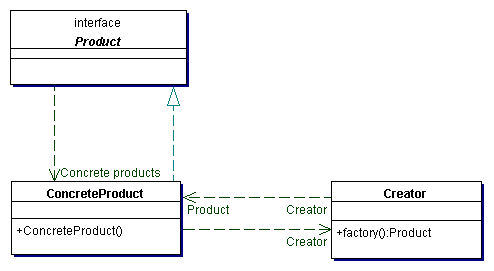
| 角色 | 類名 | 職責 |
|---|---|---|
| 工廠類 | Creator (FruitGardener) | 根據參數決定建立哪個具體產品實例 |
| 抽象產品 | Product (FruitIF) | 定義產品共同介面 |
| 具體產品 | ConcreteProduct (Apple, Grape...) | 實作產品介面 |
public class Creator {
    public Product factory() {
        return new ConcreteProduct();
    }
}

public interface Product { }

public class ConcreteProduct implements Product {
    public ConcreteProduct() {}
}
| 維度 | 簡單工廠 | 工廠方法 |
|---|---|---|
| 核心類 | 單一具體工廠類 | 抽象工廠介面/類 + 多個具體工廠子類 |
| 擴展新產品 | 修改工廠類源碼(違反 OCP) | 新增具體工廠子類(符合 OCP) |
| 適用場景 | 產品類型固定、數量少 | 產品族擴展頻繁、多維度變化 |
本質關係:簡單工廠是工廠方法的退化特例——當系統確定只需一個工廠類時,將抽象工廠合併到具體工廠中即得簡單工廠。
需求:支援圓形、方形、三角形繪製與擦除,非法形狀拋出異常。
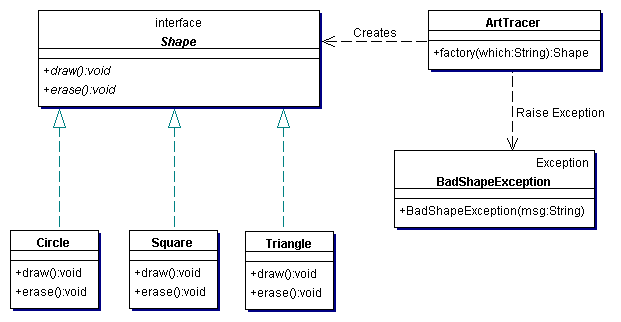
public interface Shape {
    void draw();
    void erase();
}

public class Circle implements Shape {
    public void draw() { System.out.println("Circle.draw()"); }
    public void erase() { System.out.println("Circle.erase()"); }
}
// Square, Triangle 類似...

public class BadShapeException extends Exception {
    public BadShapeException(String msg) { super(msg); }
}

public class ArtTracer {
    public Shape factory(String which) throws BadShapeException {
        if (which.equalsIgnoreCase("circle")) return new Circle();
        else if (which.equalsIgnoreCase("square")) return new Square();
        else if (which.equalsIgnoreCase("triangle")) return new Triangle();
        else throw new BadShapeException("Unsupported shape: " + which);
    }
}
try {
    ArtTracer art = new ArtTracer();
    art.factory("circle").draw();
    art.factory("diamond"); // 拋出 BadShapeException
} catch (BadShapeException e) { ... }
new 細節封裝在工廠內部,對整個系統而言,客戶端不再直接依賴具體類的建構細節。簡單工廠模式以單一工廠類 + 參數判斷實現物件建立封裝,適合產品類型較固定、變化頻率低的場景。它是理解更高階工廠模式的基石——當系統需要支援多維度產品變化(如水果/蔬菜/花卉並存)時,簡單工廠將退化為「上帝類」,此時需進化為工廠方法模式或抽象工廠模式。掌握簡單工廠的優缺邊界,是架構演進判斷力的關鍵體現。