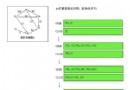
順序表用**連續記憶體**存儲線性表元素,支援隨機存取。結構包含:資料陣列、當前長度、最大容量。
#include <stdio.h>
#include <stdlib.h>

#define MAXSIZE 100
#define OK 1
#define ERROR 0
#define TRUE 1
#define FALSE 0

typedef int ElemType;
typedef int Status;

typedef struct {
    ElemType data[MAXSIZE];
    int length;
} SqList;
void InitList(SqList *L) {
    L->length = 0;
}
Status GetElem(SqList L, int i, ElemType *e) {
    if(L.length == 0 || i < 1 || i > L.length) return ERROR;
    *e = L.data[i-1];
    return OK;
}
Status ListInsert(SqList *L, int i, ElemType e) {
    if(L->length == MAXSIZE) return ERROR;      // 滿
    if(i < 1 || i > L->length + 1) return ERROR; // 位置非法 (允許在尾後插入)

    // 從後向前移動,騰出位置
    for(int k = L->length - 1; k >= i - 1; k--)
        L->data[k+1] = L->data[k];

    L->data[i-1] = e;
    L->length++;
    return OK;
}
Status ListDelete(SqList *L, int i, ElemType *e) {
    if(L->length == 0) return ERROR;            // 空
    if(i < 1 || i > L->length) return ERROR;    // 位置非法

    *e = L->data[i-1];

    // 從前向後移動,覆蓋被刪位置
    for(int k = i; k < L->length; k++)
        L->data[k-1] = L->data[k];

    L->length--;
    return OK;
}
int LocateElem(SqList L, ElemType e) {
    for(int i = 0; i < L.length; i++)
        if(L.data[i] == e) return i + 1;  // 1-based 位序
    return 0;  // 未找到
}
void PrintList(SqList L) {
    for(int i = 0; i < L.length; i++)
        printf("%d ", L.data[i]);
    printf("\n");
}
int main() {
    SqList L;
    InitList(&L);

    // 測試插入
    ListInsert(&L, 1, 10);  // [10]
    ListInsert(&L, 2, 20);  // [10, 20]
    ListInsert(&L, 2, 15);  // [10, 15, 20]
    ListInsert(&L, 4, 25);  // [10, 15, 20, 25]
    printf("插入後: "); PrintList(L);

    // 測試獲取
    ElemType e;
    GetElem(L, 2, &e);
    printf("第2個元素: %d\n", e);  // 15

    // 測試查找
    printf("20 的位序: %d\n", LocateElem(L, 20));  // 3

    // 測試刪除
    ListDelete(&L, 2, &e);  // 刪除 15
    printf("刪除第2個後: "); PrintList(L);  // [10, 20, 25]

    return 0;
}
| 操作 | 順序表 | 鏈表 |
|---|---|---|
| 存取第 i 個 | O(1) | O(i) |
| 插入/刪除 | O(n) 移動元素 | O(1) 修改指標 (已定位) |
| 記憶體 | 連續,預分配,可能浪費/不足 | 動態分配,無碎片,額外指標開銷 |
| 擴容 | 需重新分配複製 | 自然增長 |
typedef struct {
    ElemType *data;   // 動態陣列
    int length;       // 當前長度
    int capacity;     // 當前容量
} DynSqList;

Status InitDynList(DynSqList *L, int init_cap) {
    L->data = (ElemType*)malloc(init_cap * sizeof(ElemType));
    if(!L->data) return ERROR;
    L->length = 0;
    L->capacity = init_cap;
    return OK;
}

Status DynListInsert(DynSqList *L, int i, ElemType e) {
    if(i < 1 || i > L->length + 1) return ERROR;
    if(L->length == L->capacity) {
        int new_cap = L->capacity * 2;
        ElemType *new_data = (ElemType*)realloc(L->data, new_cap * sizeof(ElemType));
        if(!new_data) return ERROR;
        L->data = new_data;
        L->capacity = new_cap;
    }
    // 同順序表移動邏輯...
    return OK;
}
順序表是最基礎的資料結構,理解其「連續存儲、隨機存取、插刪需移動」特性,是掌握 vector、ArrayList、動態陣列等高級容器的基礎。C 語言手動實作能深刻體會記憶體管理、邊界檢查、錯誤碼返回等系統級編程細節。