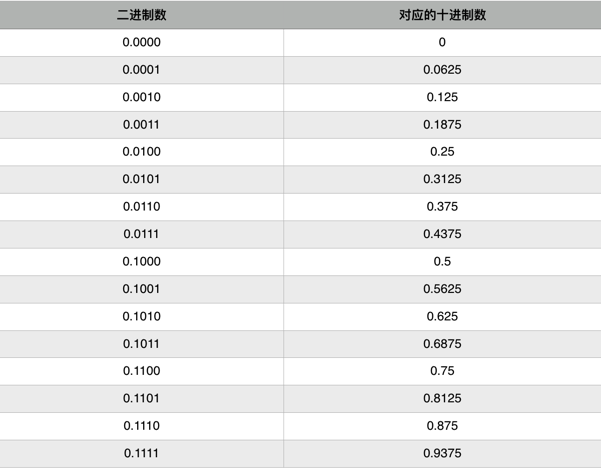
二進制轉十進制是計算機科學基礎課程核心內容,也是面試高頻手寫算法。本文從位權數學原理出發,推導遞歸與迭代兩種算法,提供完整 C++ 實現,並延伸討論任意進制轉換、大整數處理、編譯期計算與現代 C++ 標準庫方案。
二進制數 b_{n-1} b_{n-2} ... b_1 b_0 (每位 b_i ∈ {0,1}) 的十進制值:
Value = Σ_{i=0}^{n-1} b_i × 2^i
= b_0×2^0 + b_1×2^1 + b_2×2^2 + ... + b_{n-1}×2^{n-1}101₂ → 5₁₀位權: 2² 2¹ 2⁰
二進制: 1 0 1
計算: 1×4 + 0×2 + 1×1 = 4 + 0 + 1 = 5設 B(n) 為 n 位二進制數的十進制值,考慮最低位:
B(n) = (高位部分值) × 2 + 最低位值
= B(n-1) × 2 + b_0bin2dec(0) = 0
bin2dec(x) = bin2dec(x / 10) * 2 + (x % 10) // x 為十進制整數形式的二進制數101bin2dec(101)
= bin2dec(10) * 2 + 1
= (bin2dec(1) * 2 + 0) * 2 + 1
= ((bin2dec(0) * 2 + 1) * 2 + 0) * 2 + 1
= ((0 * 2 + 1) * 2 + 0) * 2 + 1
= (1 * 2 + 0) * 2 + 1
= 2 * 2 + 1
= 5#include <iostream>
#include <stdexcept>
#include <climits>
long long bin2decRecursive(int binary) {
// 輸入驗證:確保只包含 0/1
int temp = binary;
while (temp > 0) {
int digit = temp % 10;
if (digit != 0 && digit != 1)
throw std::invalid_argument("Input contains non-binary digits");
temp /= 10;
}
if (binary == 0) return 0;
return bin2decRecursive(binary / 10) * 2 + (binary % 10);
}long long bin2decIterative(int binary) {
long long result = 0;
long long power = 1; // 2^0
while (binary > 0) {
int digit = binary % 10;
if (digit != 0 && digit != 1)
throw std::invalid_argument("Non-binary digit");
result += digit * power;
power <<= 1; // power *= 2
binary /= 10;
}
return result;
}#include <string>
#include <cctype>
long long bin2decString(const std::string& binaryStr) {
long long result = 0;
for (char ch : binaryStr) {
if (ch != '0' && ch != '1')
throw std::invalid_argument("Invalid binary string");
result = (result << 1) + (ch - '0'); // result * 2 + digit
}
return result;
}int main() {
std::cout << "請輸入一個二進制數: ";
std::string input;
std::cin >> input;
try {
// 方法 1: 字串版本 (推薦)
long long decimal = bin2decString(input);
std::cout << "十進制結果: " << decimal << '\n';
// 方法 2: 整數版本 (若輸入較小)
if (input.length() <= 10) { // int 範圍內
int binaryInt = std::stoi(input);
std::cout << "遞歸結果: " << bin2decRecursive(binaryInt) << '\n';
std::cout << "迭代結果: " << bin2decIterative(binaryInt) << '\n';
}
} catch (const std::exception& e) {
std::cerr << "錯誤: " << e.what() << '\n';
}
return 0;
}| 版本 | 時間複雜度 | 空間複雜度 | 最大位數 | 適用場景 |
|---|---|---|---|---|
| 遞歸 | O(n) | O(n) 棧幀 | ~19 位 (int 範圍) | 教學演示、位數較小 |
| 迭代 | O(n) | O(1) | ~19 位 (int 範圍) | 生產環境、嵌入式 |
| 字串 | O(n) | O(1) | ~63 位 (long long) | 通用、任意長度 |
| 大整數 | O(n²) | O(n) | 無限 (記憶體允許) | 加密、科學計算 |
int (32 位):最大二進制 1111111111111111111111111111111 (31 位) → 2,147,483,647long long (64 位):最大 63 位二進制 → 9,223,372,036,854,775,807Value = Σ digit_i × base^ilong long anyBaseToDec(const std::string& str, int base) {
if (base < 2 || base > 36) throw std::invalid_argument("Base 2-36");
long long result = 0;
for (char ch : str) {
int digit;
if (ch >= '0' && ch <= '9') digit = ch - '0';
else if (ch >= 'A' && ch <= 'Z') digit = ch - 'A' + 10;
else if (ch >= 'a' && ch <= 'z') digit = ch - 'a' + 10;
else throw std::invalid_argument("Invalid character");
if (digit >= base) throw std::invalid_argument("Digit >= base");
result = result * base + digit;
}
return result;
}#include <string>
int main() {
std::string bin = "101010";
int dec = std::stoi(bin, nullptr, 2); // 基數 2
long long dec2 = std::stoll(bin, nullptr, 2);
std::cout << dec << '\n'; // 42
}#include <charconv>
#include <string_view>
int main() {
std::string bin = "101010";
int value = 0;
auto result = std::from_chars(bin.data(), bin.data() + bin.size(), value, 2);
if (result.ec == std::errc()) {
std::cout << value << '\n'; // 42
}
}#include <format>
#include <bitset>
int main() {
int dec = 42;
std::cout << std::format("二進制: {:b}\n", dec); // 101010
std::cout << std::format("八進制: {:o}\n", dec); // 52
std::cout << std::format("十六進制: {:x}\n", dec); // 2a
// 編譯期位運算
constexpr std::bitset<8> bits(42);
std::cout << bits << '\n'; // 00101010
}// C++11 constexpr 遞歸
constexpr long long bin2decConstexpr(long long binary) {
return binary == 0 ? 0 : bin2decConstexpr(binary / 10) * 2 + binary % 10;
}
// C++14 變長模板編譯期字串解析
template <char... Chars>
constexpr long long bin2decLiteral() {
long long result = 0;
(void)std::initializer_list<int>{
(result = result * 2 + (Chars - '0'), 0)...
};
return result;
}
// 使用
constexpr auto val = bin2decLiteral<'1','0','1','0','1','0'>(); // 編譯期計算 42
static_assert(val == 42);Σ b_i × 2^i 及其遞歸形式 f(n) = f(n-1)×2 + b_0stoi(s, nullptr, 2), from_chars, bitsetconstexpr、模板元編程、用戶定義字面量cpp_int二進制轉十進制的核心是**位權展開**與**霍納法則** (Horner's Method) 的遞歸形式:
result = ((b_{n-1} × 2 + b_{n-2}) × 2 + ... ) × 2 + b_0工程選擇指南:
std::from_chars (C++17) 或 stoll(s, nullptr, 2) (C++11)result = result * 2 + digitconstexpr 函數或模板元編程cpp_int 或自實現大整數類掌握進制轉換的數學本質、算法變體與標準庫工具,不僅能應對面試考察,更能在協議解析、編譯器開發、嵌入式程式設計、密碼學等領域靈活處理各種數值表示轉換需求。