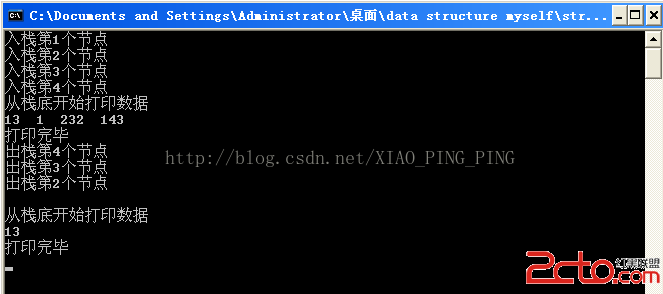
堆疊 是一種線性資料結構,僅允許在一端(堆疊頂)進行插入與刪除操作。類似一疊書:只能在最上方放入新書、取出最上方的書。若要取第 3 本,必須先移走前 2 本。
每個程序擁有自己的呼叫堆疊,儲存函數呼叫鏈、區域變數、返回位址。ESP(Stack Pointer)暫存器指向堆疊頂。函數呼叫時壓入返回位址與區域變數;返回時彈出。此機制超出資料結構教學範圍,但理解有助於除錯。
#include
using namespace std;

#define MAX 10

class Stack {
    int arr[MAX];
    int top;  // -1 表示空堆疊
public:
    Stack() : top(-1) {}

    void push(int a) {
        if (top + 1 >= MAX) {
            cout << "STACK FULL!!" << endl;
            return;
        }
        arr[++top] = a;
    }

    int pop() {
        if (top == -1) {
            cout << "STACK IS EMPTY!!!" << endl;
            return 0;  // 或拋出例外
        }
        return arr[top--];
    }
};

int main() {
    Stack a;
    a.push(3);  cout << "3 Pushed\n";
    a.push(10); cout << "10 Pushed\n";
    a.push(1);  cout << "1 Pushed\n\n";

    cout << a.pop() << endl;  // 1
    cout << a.pop() << endl;  // 10
    cout << a.pop() << endl;  // 3
    return 0;
}
輸出驗證 LIFO 特性:最後推入的 1 最先彈出。
std::optional。int,現代 C++ 應使用模板實作泛型堆疊。std::stack 使用範例
#include
#include
#include

int main() {
    std::stack stk;
    stk.push("first");
    stk.push("second");
    stk.push("third");

    while (!stk.empty()) {
        std::cout << stk.top() << std::endl;  // third, second, first
        stk.pop();
    }
    return 0;
}
std::stack 為容器配接器,預設以 std::deque 為底層容器,支援動態增長、泛型、標準介面,生產代碼首選。